


Are Solar Panels Worth It? Costs, Savings and What Homeowners Need to Know
30th June 2026
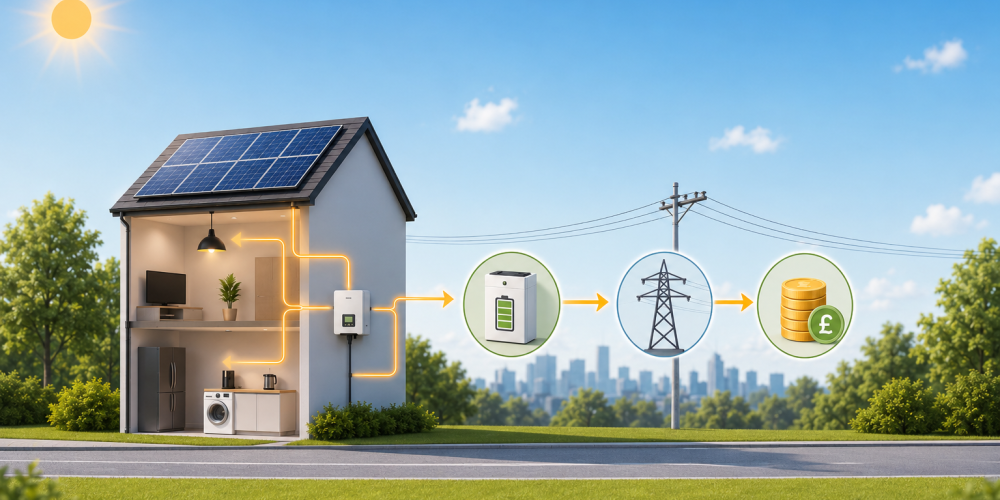
If you've started researching solar panels, you've probably realised there's a huge amount of conflicting information online. Some people claim you'll never pay another electricity bill, while others say solar simply isn't worth it in the UK.
The truth is somewhere in the middle.
Modern solar panels can significantly reduce the amount of electricity you buy from the grid, but understanding how solar panels, battery storage and electricity tariffs work together is the key to deciding whether they're the right investment for your home.
This guide explains what homeowners need to know before installing solar panels, from how they work in the UK's climate to how much you could realistically save.
How do solar panels actually work?
Solar panels generate electricity from daylight, not just direct sunshine.
That means they continue producing electricity even on cloudy days, although they'll generate less than they would during bright sunshine. Throughout spring and summer, longer daylight hours allow your system to produce considerably more electricity than during the shorter, darker days of winter.
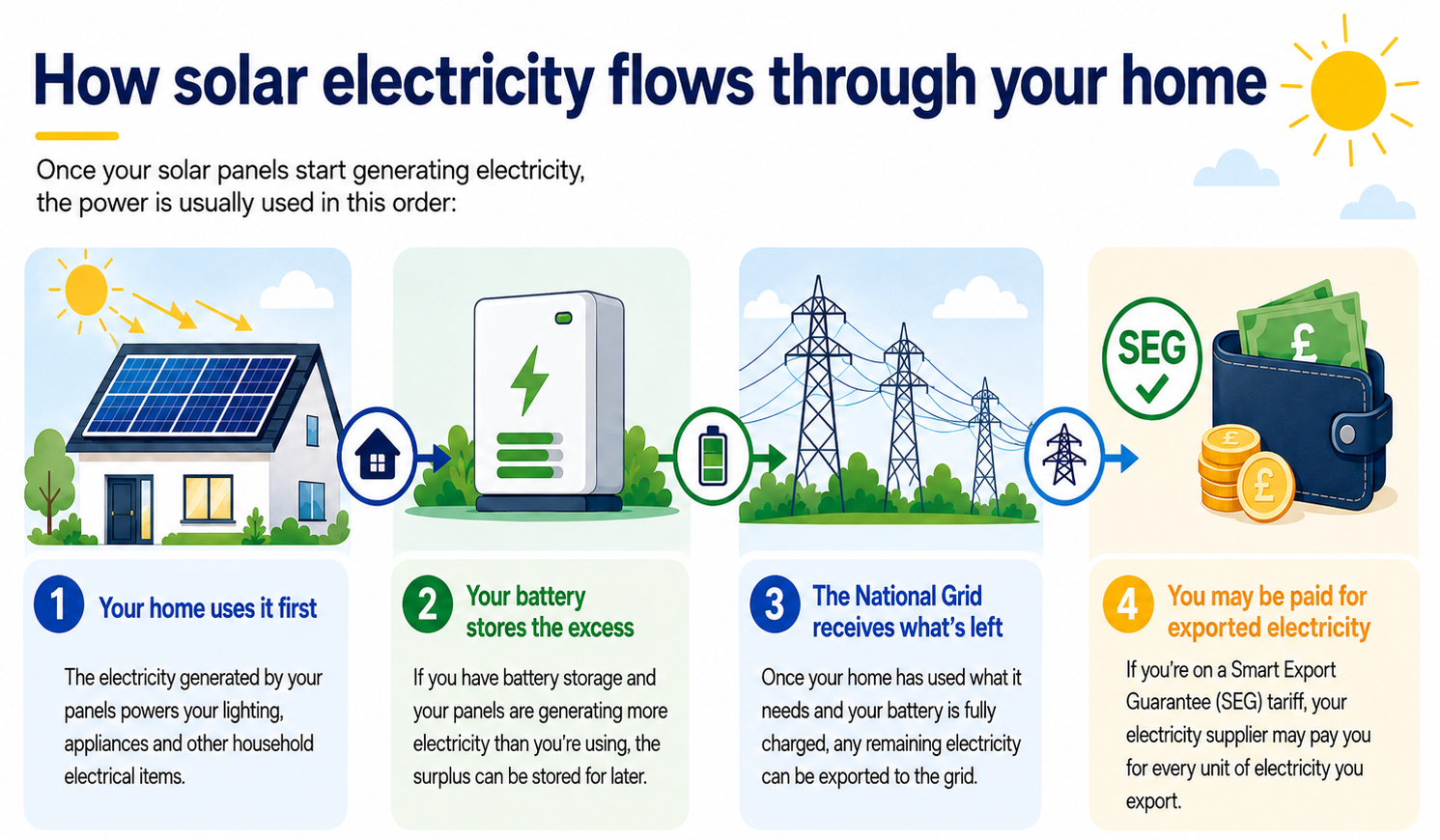
Whenever your solar panels are generating electricity, your home uses that energy first. This means appliances such as your washing machine, dishwasher, television and lighting can all be powered by the electricity your roof is producing before any electricity is imported from the National Grid.
If your panels generate more electricity than you're using at that moment, the excess energy can either be stored in a battery or exported back to the grid.
Can solar panels power your home all year round?
For much of the year, particularly during the spring and summer months, many households find their solar panels generate a significant proportion of their electricity needs.
However, solar generation naturally changes with the seasons.
During summer, your system may produce far more electricity than your household uses on sunny days. During winter, shorter daylight hours and weaker sunlight mean your panels will generate much less electricity, so you'll rely more heavily on electricity from the grid.
Rather than aiming for completely free electricity, most homeowners achieve something that's arguably more valuable – a substantial reduction in the amount of electricity they need to buy every year.
Why battery storage makes such a difference
One of the biggest challenges with solar energy is timing.
Many people are out at work during the day when their panels are generating the most electricity. Without a battery, any surplus electricity that isn't being used is exported to the grid.
A home battery changes that.
Instead of sending excess electricity away immediately, the battery stores it so it can be used later that evening when the sun has gone down. This allows homeowners to use much more of the electricity they've generated themselves rather than buying it back from their supplier later in the day.
For many households, adding battery storage significantly increases the financial benefits of installing solar panels.
Can batteries store electricity until winter?
This is probably one of the biggest misconceptions about solar panels.
While batteries can hold their charge for long periods if left unused, that's not how they're designed to operate.
Domestic battery systems work on a daily cycle. They charge during the day, discharge during the evening and overnight, then recharge again the following day.
Although larger batteries are available, they still aren't intended to store months' worth of electricity.
The bigger issue isn't battery capacity – it's seasonal generation. Solar panels naturally produce much less electricity during winter, when homes generally need more energy.
Current home battery technology is designed to maximise the electricity you generate each day, not to store summer sunshine for use several months later.
What happens to electricity you don't use?
If your battery becomes fully charged and your solar panels are still generating electricity, the remaining surplus doesn't go to waste.
Instead, it's exported to the National Grid through your smart meter.
Many electricity suppliers offer the Smart Export Guarantee (SEG), which pays homeowners for every unit of electricity they export. Depending on the supplier, these payments may be made directly into your bank account or credited against your electricity bill.
This means your roof can continue generating value even when you're not using all of the electricity it produces.
Why do you still pay an electricity standing charge?
This often surprises homeowners.
Even if your solar panels generate most of your electricity, you'll usually continue paying your supplier's daily standing charge.
That's because the standing charge isn't payment for the electricity itself. Instead, it contributes towards maintaining your connection to the National Grid, including local electricity cables, substations, your meter and the wider electricity network.
As long as your property remains connected to the grid, the standing charge normally still applies.
Choosing the right electricity tariff
Installing solar panels often opens the door to electricity tariffs specifically designed for homes with renewable energy.
Some suppliers offer cheaper overnight electricity, allowing homeowners to charge their battery at lower prices when poor weather is forecast. Others focus on paying more for exported electricity.
Choosing the right tariff can make a noticeable difference to your annual savings, particularly if you have battery storage.
How much could solar panels save?
Every property is different, so there isn't a single answer.
Savings depend on factors including:
- The size of your solar panel system.
- Whether you install battery storage.
- Your household's electricity usage.
- Whether you're at home during the day.
- The direction and angle of your roof.
- The electricity tariff you choose.
Many households reduce the amount of electricity they buy from the grid by between 50% and 80%, although every home is different.
While installing solar panels is a significant investment, many suppliers now offer finance options, including interest-free credit for eligible customers, allowing homeowners to spread the cost rather than paying everything upfront.
When comparing quotes, it's worth looking beyond the installation price alone. Consider the expected annual savings, any payments you could receive for exporting electricity, the warranty, and how long it may take for the system to pay for itself.
The best way to think about solar isn't as a way of eliminating electricity bills completely, but as a long-term investment that reduces your reliance on buying electricity while helping protect you from future energy price rises.
Things to consider before investing in solar panels
Every home is different, which means the right solar panel system for one property may not be the best option for another. Before requesting quotes, it's worth gathering a little information so you can compare recommendations more confidently.
Here are a few things to think about:
- Check your annual electricity usage. Your latest electricity bill should show how many kilowatt-hours (kWh) you use each year. This is one of the most important figures when estimating potential savings.
- Look at your roof. The size, angle and direction of your roof can all affect how much electricity your solar panels are likely to generate.
- Think about your future plans. If you're considering buying an electric vehicle, installing a heat pump or extending your home, your electricity usage could increase over the coming years. Planning ahead may influence the size of system that's right for you.
- Decide whether battery storage is worthwhile. A battery can help you use more of the electricity you generate yourself, particularly if your home is empty during the day.
- Compare more than just the installation price. Look at the equipment being offered, warranties, expected energy generation, battery capacity, aftercare and any maintenance requirements, not simply the cheapest quote.
- Understand the available electricity tariffs. Some suppliers offer specialist tariffs for homes with solar panels and battery storage, which may help maximise your savings or increase payments for exported electricity.
Taking a little time to understand your household's energy use before speaking to installers can make it much easier to compare quotes and choose a system that's right for your home, your budget and your long-term plans.
Can AI estimate how much you could save?
Yes – AI can provide a useful estimate before you start requesting quotes.
If you have a recent electricity bill, AI tools such as ChatGPT can estimate potential savings based on information including:
- Your annual electricity usage (kWh).
- Your annual electricity costs.
- Your location in the UK.
- The direction your roof faces.
- Whether you're considering battery storage.
- Whether you're planning to install a heat pump in the future.
While AI can't replace a professional solar survey, it can help you understand how different system sizes, batteries and electricity tariffs could affect your annual energy bills and how long it may take for a system to pay for itself.
The more information you can provide, the more accurate the estimate is likely to be.
Solar panels and heat pumps: a smart combination
If you're also considering replacing your gas boiler with an air source heat pump, solar panels can make even more sense.
Heat pumps run on electricity, so generating some of that electricity yourself can help reduce their running costs. Adding battery storage means more of that electricity can be used during the evening, making the two technologies work particularly well together.
If you're comparing different ways to improve your home's energy efficiency, it's worth considering how these technologies complement one another rather than viewing them as separate investments.
You might also like to read our guide, How Much Does It Cost to Replace a Boiler with a Heat Pump?, where we explain how heat pumps work, whether you can keep your existing radiators, what grants are available and what to consider before making the switch.
Are solar panels worth it?
For many UK homeowners, the answer is yes.
Modern solar panel systems won't usually eliminate your electricity bill altogether, but they can significantly reduce the amount of electricity you buy, lower your carbon emissions and provide greater control over your household energy costs.
The key is understanding how solar panels, battery storage and electricity tariffs work together. With the right system for your property, solar can become one of the most effective long-term investments you make in your home.
As more households look for ways to improve energy efficiency and reduce long-term running costs, solar panels are likely to remain an increasingly popular option. Taking the time to understand how they work today can help you make a more informed decision for years to come.